


Packing shouldn’t feel like a wrestling match with a zipper. The goal isn’t to cram your entire closet into one bag – it’s to bring the right things, keep them easy to find, and arrive with clothes that look ready to wear (not like they’ve survived a tumble dryer).
This guide on how to pack a suitcase is built for vacations – weekends away, beach breaks, city trips, family holidays, long adventures, and everything in between. You’ll get a clear system for what to pack, how to fold or roll it, where to put it in the suitcase, and how to avoid the most common packing mistakes.
How to pack a suitcase
Why packing well makes travelling easier
A well-packed suitcase does three important things:
- Saves time: You can find what you need quickly – no digging, no chaos.
- Protects your stuff: Better weight distribution means fewer crushed items, fewer leaks, fewer wrinkles.
- Helps you pack less: Good organization makes it obvious what you truly need (and what you don’t).
And the biggest benefit to understanding how to pack a suitcase efficiently? Packing stops being stressful. It becomes a repeatable routine you can use for every trip.

Step 1: Start with the right suitcase
Before you fold a single shirt, make sure your suitcase is working with you.
Hard-shell vs soft-shell: which is better?
Both work. The best choice depends on your travel style.
- Hard-shell: Great for protection, better for fragile items, holds its shape, usually easier to wipe clean.
- Soft-shell: Often lighter, can be more flexible to squeeze into tight spaces, exterior pockets can be handy.
If you’re the kind of traveler who tends to bring souvenirs home (or who always ends up needing “just one more inch”), soft-shell can be forgiving. If you want structure and protection, hard-shell is your friend.
Carry-on vs checked suitcase
Think in terms of trip length and itinerary:
- Carry-on is ideal for: short trips, city breaks, minimalist travel, trips with multiple stops, anyone who hates baggage claim.
- Checked luggage is ideal for: longer trips, family vacations, cold-weather trips, vacations where you need bulkier items.
If you’re doing a vacation with multiple activities (beach + city + hikes), a slightly larger suitcase can keep you from playing luggage Tetris every morning.
Look for a suitcase with:
- Compression straps (to keep clothing from shifting)
- A divider panel (helps separate categories)
- A small internal pocket (great for chargers, jewelry pouch, or small essentials)
These features make packing more organized and help your suitcase keep its shape.
Step 2: Plan what you’re packing before you pack
The fastest way to overpack is to start throwing things in without a plan. A simple checklist mindset will save space and mental energy.
Match your packing to your vacation
Ask yourself:
- What’s the weather going to feel like (not just the forecast)?
- Am I doing activities that require specific gear?
- How often will I realistically change outfits?
A beach trip with dinners out packs differently than a hiking-heavy vacation, and a city break usually needs comfortable walking shoes more than extra outfits.
Build a “rewearable” wardrobe
Your suitcase fills up fast with “one-time” outfits. Instead, aim for pieces you can mix and match:
- 2–3 bottoms that work with multiple tops
- Layers that can be dressed up or down
- Fabrics that don’t wrinkle easily (more on that below)
The 5-4-3-2-1 packing rule (and why it works)
A common, simple packing framework is the 5-4-3-2-1 rule, usually meaning:
- 5 tops
- 4 bottoms
- 3 pairs of shoes
- 2 dresses or “nice” outfits (or substitutes like button-downs)
- 1 jacket/outer layer
It’s not a perfect rule for every trip, but it’s a great starting point because it naturally encourages outfit pairing without overpacking.
Adjust it like this:
- For warm-weather vacations: fewer layers, more breathable tops
- For cold-weather trips: fewer tops, more layers (base layer + mid layer + outer layer)
- For long trips: treat it as a “laundry cycle” framework (you’re packing for about a week, then re-wearing or washing)
Step 3: Choose fabrics that make packing easier
Fabric choice affects suitcase space more than people realize. The easiest travel wardrobes are built from fabrics that are:
- Lightweight
- Wrinkle-resistant
- Quick-drying
- Breathable
- Easy to layer
This helps you pack fewer items while staying comfortable in different conditions – and it also makes it easier to wash something quickly and re-wear it during your trip.
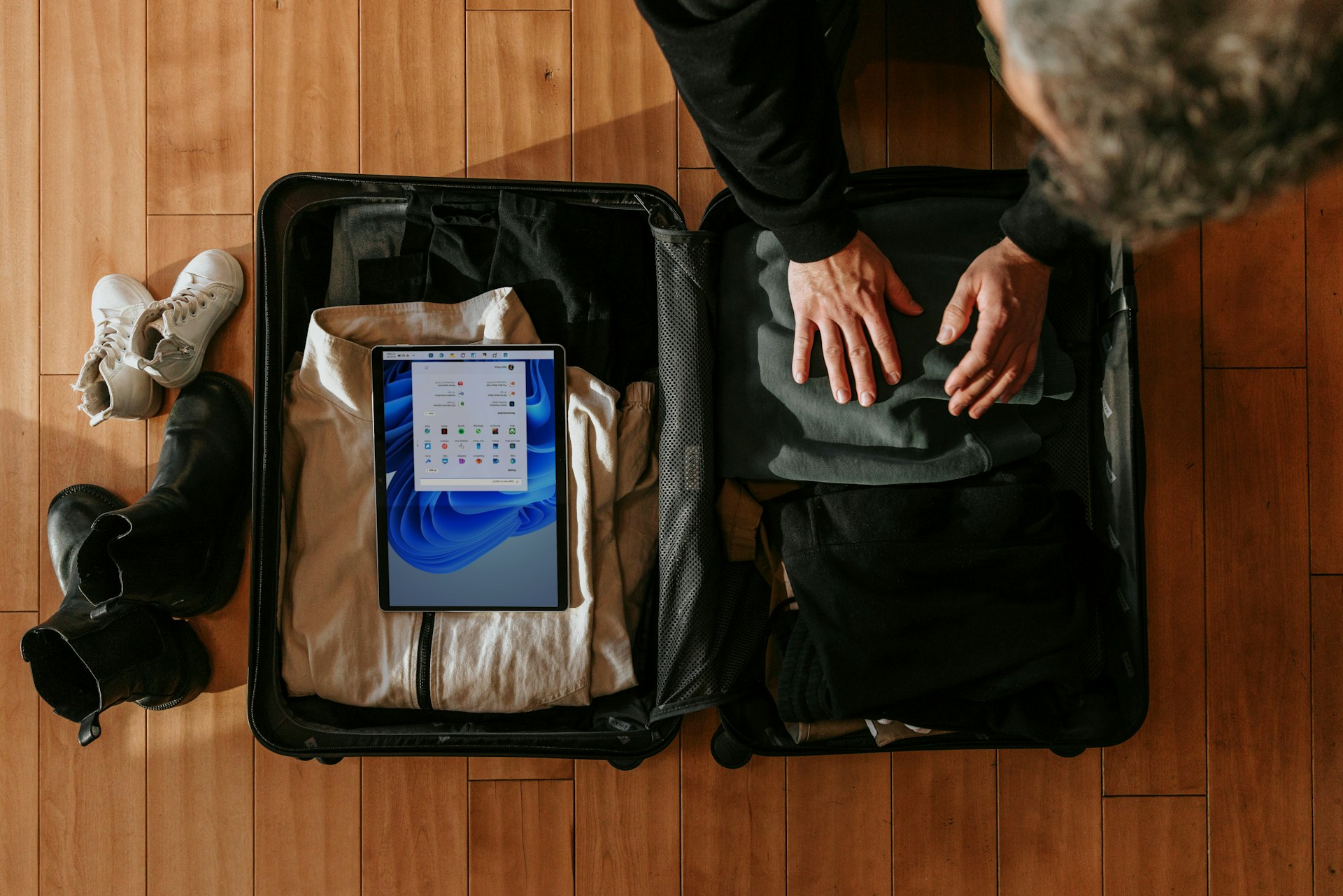
Step 4: Roll or fold? Use the method that fits the item
When looking at how to pack a suitcase, one of the most-asked questions is:
Is it better to roll your clothes or fold them in a suitcase?
Both are useful – depending on what you’re packing.
- Rolling is best for: t-shirts, casual tops, underwear, gym clothes, pajamas, softer fabrics.
- Benefits: saves space, reduces deep creases, makes it easy to “stack” items like a drawer.
- Folding is best for: structured clothing like blazers, dress shirts, trousers, and anything that holds its shape.
- Benefits: keeps seams aligned, reduces distortion, protects structured garments.
The most effective approach when packing a suitcase is usually a hybrid:
- Roll the soft stuff.
- Fold the structured stuff.
- Use a “top layer” strategy for wrinkle-prone pieces.
Step 5: Pack in layers (this is the game-changer)
If you want to know the most effective way how to pack a suitcase, it’s this:
What’s the most effective way to pack a suitcase?
Use a simple 3-layer system: heavy at the bottom, core items in the middle, delicate on top, with smart use of gaps.
Here’s the system that works for almost every vacation.
Bottom layer (wheel side): heavy + sturdy items
The wheel side is the “foundation” of your suitcase. Put your heavier items here so the suitcase rolls smoothly and doesn’t topple.
Pack here:
- Shoes (in bags if possible)
- Jeans or heavier trousers
- Bulkier items like hoodies (if you’re bringing one)
- Toiletry bag (if it’s leak-proof and sealed)
Shoe tip:
Place shoes with soles facing the edges of the suitcase, or against the shell, and fill the inside of shoes with socks or small items to reclaim space.
Middle layer: your main clothing (rolled + cubes)
This is where the majority of your clothing goes.
Options:
- Rolled clothing stacks (rolled tops, shorts, casual dresses)
- Packing cubes
- Folded stacks (for items that shouldn’t be rolled)
The middle layer should be tight and stable. If things can shift, they will shift – especially if your suitcase is checked.
Top layer: delicate and “first night” items
Think of the top layer as “quick access” and “wrinkle protection.”
Pack here:
- Sleepwear
- Delicates
- A light outfit you might want quickly
- Anything you don’t want crushed
If your suitcase has a divider panel, the top layer is also a great place for items you want separated: swimwear, undergarments, or a spare tote bag.
Use gaps and edges like hidden storage
These small spaces add up:
- Socks and underwear: tuck along the edges or between packing cubes
- Belts: lay flat along the perimeter of the suitcase
- Chargers: pack in a small pouch and slide into a gap
- Jewelry pouch: tuck into the top layer or internal pocket
Step 6: How to roll clothes properly (quick, wrinkle-minimizing method)
Rolling works best when it’s tight but not stretched.
- Lay the item flat and smooth wrinkles with your hands.
- Fold sleeves inward (for shirts).
- Fold the bottom third up once (optional but helps reduce creases).
- Roll from the top down in a tight cylinder.
- Place rolled items side-by-side like a drawer.
This method makes it easy to “see everything” when you open your suitcase, which reduces that frantic mid-trip rummaging.
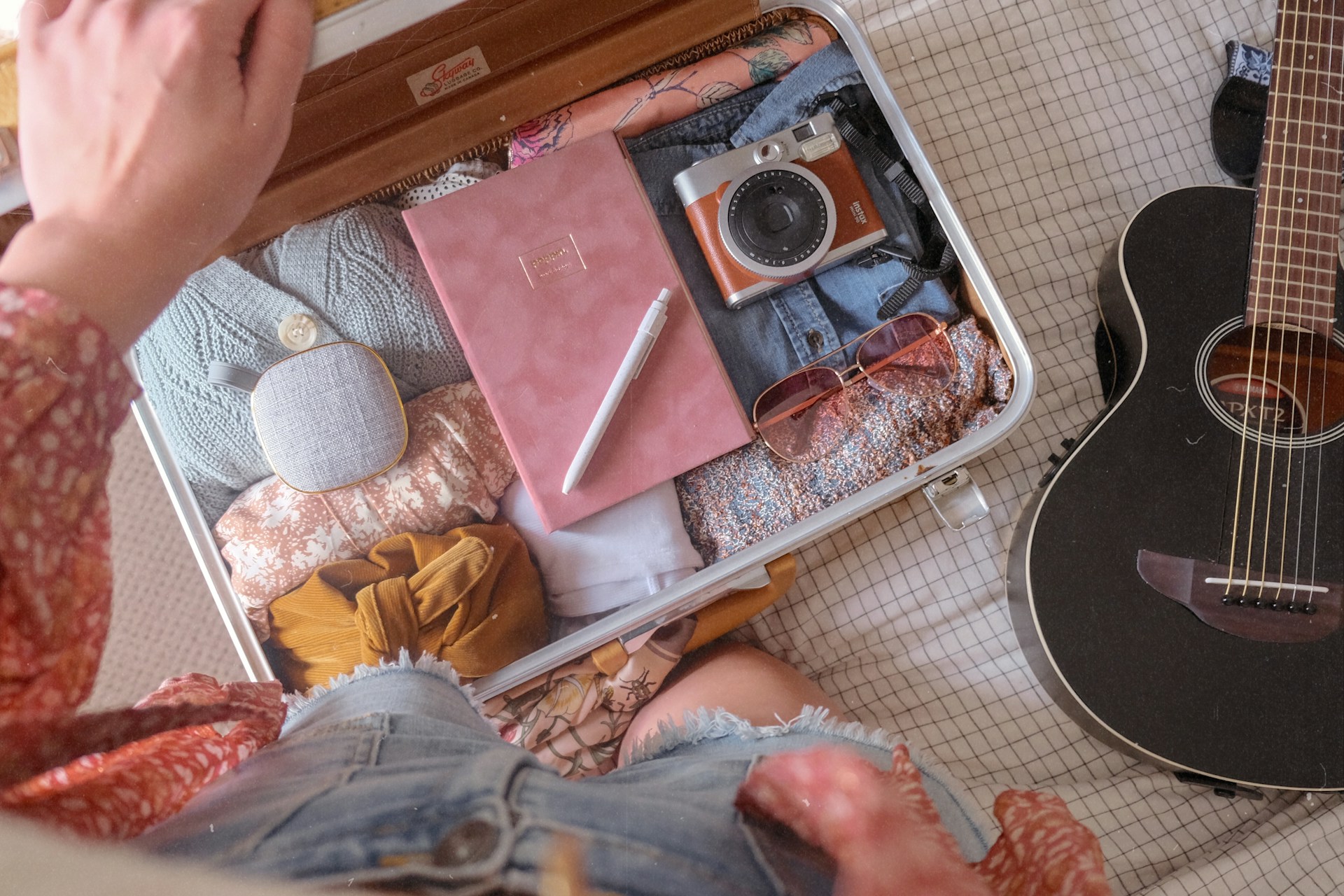
Step 7: How to fold structured items to avoid wrinkles
Different items can be folded in different ways to save space and avoid those dreaded travel wrinkles.
Folding trousers or jeans
- Fold in half lengthwise (align seams).
- Fold once more (or roll loosely if they’re soft denim).
- Place near the bottom or middle layer.
Folding button-down shirts
- Button the shirt (helps it hold shape).
- Lay face down, fold sleeves inward.
- Fold sides slightly inward.
- Fold bottom up and then once more.
- Place on top of your middle layer or inside a garment folder if you have one.
Packing a suit or blazer (wrinkle-minimizing approach)
If you’re bringing a blazer or suit jacket for a nice dinner, wedding, or event:
- Turn the jacket inside out (this protects the exterior).
- Fold one shoulder inside out, then tuck the other shoulder into it (this reduces shoulder creasing).
- Lay it flat near the top layer, ideally over softer clothes.
- Add tissue paper or a thin layer between folds to reduce friction creases.
Step 8: Packing cubes – how to use them without wasting space
Packing cubes are excellent if you use them intentionally. They’re not magic – they’re a structure tool.
What packing cubes are best for
- Keeping categories together (tops in one cube, underwear in another)
- Separating clean and worn clothes
- Making unpacking faster (especially in hotels)
How to pack cubes efficiently
- Don’t half-fill cubes (they waste space and shift).
- Use 1–2 medium cubes for clothing, 1 small cube for socks/underwear.
- Place cubes in the middle layer like a fitted grid.
When cubes aren’t necessary
If you’re packing very light for a weekend trip, rolling and stacking may be faster and just as clean.
Step 9: How to pack shoes the smart way
Shoes are bulky. The easiest way to save space is to bring fewer pairs – but make them work harder.
A simple shoe rule for most vacations
- 1 everyday walking pair
- 1 nicer pair (or sandals in warm weather)
- Optional 1 activity-specific pair (hiking shoes, workout shoes, etc.)
Best way to pack shoes
- Put them in shoe bags (or even shower caps in a pinch).Place along the bottom layer near the wheel side.
- Stuff shoes with socks, chargers, or small items to reclaim space.
Step 10: Toiletries, liquids, and leak-proof packing
Toiletries are the main reason suitcases get ruined. Leaks happen – even when bottles are “closed.”
Toiletries in checked vs carry-on
- Carry-on: liquids must follow airport liquid rules; keep essentials accessible.
- Checked: you can bring larger bottles, but you must protect against leaks.
TSA liquid rule (simple version)
For carry-on bags, liquids typically need to be in small containers and fit into a single clear bag (often referred to as the 3-1-1 rule). Rules can vary slightly by airport and country, so treat this as a baseline and keep liquids easy to inspect.
Where toiletries should go in the suitcase
Best placement:
- Near the bottom layer (more stable)
- In a sealed toiletry bag
- Inside a secondary zip bag if anything is prone to leaking
Leak-proof tip:
Put plastic wrap under the cap, then screw the cap back on. It’s simple and surprisingly effective.
Step 11: What to put in your carry-on (and what not to risk checking)
Even if you’re checking a bag, your carry-on should cover you for a “just in case” day.
Always pack in your carry-on:
- Medication
- Phone + charger (and portable battery if you use one)
- Passport / ID / travel documents
- Wallet and valuables
- A change of clothes (especially underwear)
- Anything you can’t easily replace on arrival
Do phone chargers go in hand luggage or suitcase?
Either is fine for most chargers – but it’s smarter to keep them in your hand luggage. If your checked bag is delayed, you’ll still have the essentials to get through the first night (and keep your phone alive).
Step 12: Final checks before you zip it up
Distribute weight so the suitcase rolls smoothly
- Heavy items near the wheels
- Lighter items toward the top
- Keep fragile items cushioned by clothing
Tighten compression straps and re-check stability
Compression straps should hold everything in place without crushing delicate items.
Leave a little room if you can
If you’re traveling for fun, you’ll probably come home with something – snacks, souvenirs, a new outfit, or gifts. Even a small amount of space can save you from last-day suitcase panic.
Common packing mistakes (and how to avoid them)
Packing too many “just in case” items
Instead, pack for what you will most likely do, and make sure your outfits can mix and match.
Bringing too many shoes
Shoes steal space fast. Aim for multi-purpose pairs.
Not planning for laundry at all
For trips over a week, decide ahead of time:
- Are you doing laundry once?
- Are you packing travel detergent sheets?
- Are you bringing quick-dry items?
Packing liquids without proper protection
Even one leak can ruin an entire suitcase. Seal, bag, and place carefully.
Packing tips for different types of travelers
For a family vacation
- Use packing cubes by person or category (kids’ outfits together)
- Pack one “quick access” cube with snacks, wipes, or essentials if traveling with children
- Keep swimwear and pajamas easy to grab
For a long trip
- Pack for a week, not for the entire duration
- Choose quick-dry fabrics and plan laundry
- Build around a color palette so everything matches
For a weekend trip
- Wear your bulkiest items (jacket, heavier shoes) while traveling
- Pack one versatile outfit for day + one for evening
- Keep toiletries minimal (travel sizes)
Final thoughts: pack smarter, travel easier
Packing well isn’t about perfection – it’s about having a simple system you can repeat. Once you know what you’re bringing, where it goes, and how to keep it organized, packing stops feeling chaotic and starts feeling easy. Use this as your go-to routine, tweak it to fit your travel style, and you’ll spend less time wrestling with your suitcase—and more time enjoying the trip.